HBS Quick Links
  • HBS Home
  • MBA
  • Executive Education
  • Doctoral Programs
  • Faculty and Research
  • Alumni
  • Publishing
Site Index
  • HBS Home
  • Contact Us
  • Map/Directions

Harvard Business School Alumni

  • Home
  • Alumni News
  • Faculty News
  • Editors Blogs
  • Past Issues
  • About
  • Alumni Homepage
  • Tools
    • You are not logged in.

Login

Click the red "LEFA & Password" link at left to learn about your Lifetime Email Forwarding Address and set up a password.

Click the red "?" to learn about your Lifetime Email Forwarding Address and set up a password.

.hbs.edu
Forgot your password?
Tools Help

Find a friend, find a job, or find out more about the latest HBS research. Access a wealth of tools and resources exclusively for HBS alumni with your LEFA.

Cover

Current Issue: September 2009

  • Contents
    • Rich Wilson
    • E Ink’s wild ride
    • Over the Top
    • Read All About It!
  • Editor's Note
  • Letters
  • In Brief
    • The Scene: We Did It!
    • My Two Cents: Sheryl WuDunn (MBA ’86)
    • MBA Oath Maintains Momentum
    • Ready for Launch
    • Bold Idea Takes Off
    • Noted & Quoted
    • From Bytes to Bites
    • Class Day, Commencement Mark New Beginning for Newest Alumni
    • Remembering "Mr. Harvard"
    • Make the Most of HBS Alumni Resources
    • Back to School
    • 2 + 2 = All Smiles
    • of Note
    • Alumni Bookshelf: Building Your Own Dream Team
    • Alumni Books
  • Ideas
    • Faculty Q&A with HBS professor Peter Tufano: Consumer Finance Makes HBS Debut
    • Case Study: Of Value and Values
    • Faculty Opinion: How to Fix Wall Street
    • Faculty Books
    • Faculty Research Online
  • Newsmakers
  • Last Look

Advertise with Us

Change Address

Last Look

What's going on here?...
Find out

september 2006

Research, articles, news mentions, and blogs from the HBS faculty. Submit a story

Strange Bedfellows
by Mihir A. Desai

Since when do the taxman and the shareholder agree? IRS Commissioner Mark Everson and SEC Chairman Christopher Cox (MBA ’76) have advanced a simple, but controversial proposal. Companies would be required to disclose how much they pay in taxes — an amount, remarkably enough, impossible to decipher from public filings. Their proposal, which will likely meet fierce opposition from accountants, lawyers, and managers, is a laudable first step in restoring sanity to U.S. corporate profit reporting.

When the corporate tax was introduced, making the reporting of profits more credible was a central goal. Profits reported to tax authorities and to capital markets were essentially the same. Over time, well-considered exceptions — expensing of investments, for example — were introduced to advance policy goals such as stimulating investment.

In the last decade, the two reporting systems diverged into parallel universes. Large, unexplained gaps — more than $100 billion — have developed between the profits reported to capital markets and to tax authorities. These discrepancies can no longer be explained by accepted differences between the two reporting systems.

We shouldn’t be surprised by these developments. Imagine if you were allowed to represent your income on your tax forms and on your mortgage application differently. In a moment of weakness, you might portray your economic situation in two distinct ways.

Unlike individuals, American corporations find themselves in the curious situation of being able to characterize their income separately depending on the audience. Something as simple as interest expense can be engineered to be an expense for tax authorities and a dividend for capital markets.

This confusing state of affairs has naturally drawn the attention of the IRS, given the loss of tax revenues, but why is the SEC interested? First, this dual-reporting system creates significant confusion. In effect, one-third of costs (the tax claim on pretax profits) is not reported clearly to investors. Second, lower taxes are thought to benefit investors but this logic overlooks the fact that managers don’t always do the right thing for shareholders. If managers are opportunistic, then the extra latitude provided by the dual- reporting system can be costly to investors.

Indeed, research shows just that: Corporate tax avoidance is not valued by the market unless the firms are well-governed. The actors in various corporate scandals, including Enron, Tyco, and Parmalat, were expert in exploiting the dual-tax system to manufacture accounting earnings. Corporate tax shelters that reduce book income are rarely, if ever, undertaken, and the main benefit of many shelters is the book income they produce.

The proposal to publicly report taxes paid is an eminently sensible idea. More ambitious alternatives should also be considered, including making corporate tax returns public so shareholders can benefit from the additional information. More ambitiously still, the United States could junk the dual-book system and require corporations to pay taxes, at a considerably lower rate, on profits reported to capital markets. Such a change would save the considerable resources now dedicated to dual-reporting system compliance and allow for a lower marginal rate. Rough estimates are that a 15 percent tax on reported GAAP profits would be revenue-neutral for the government. A tax with a lower rate on a more sensible base is a central lesson of economics. Legislators would also be restricted to changes in rates as opposed to tinkering through myriad preferences.

Publicly reporting taxes paid is a sensible first step in restoring some sanity to these parallel universes. With luck, these strange bedfellows will be productive ones as well.

— Mihir A. Desai is the Rock Center Associate Professor in Finance and Entrepreneurial Management and the MBA Class of 1961 Fellow. For more of his views on reforming corporate taxation, see http://waysandmeans.house.gov/hearings.asp?formmode=view&id=4936.

september 2006

This article previously appeared in the following issue:

september 2006 Issue Cover

Table of Contents

  • Print
  • Send to a friend
  • Suggest an article

Alumni News | Mara Aspinall

Ex-Genzyme Official to Lead Testing Firm

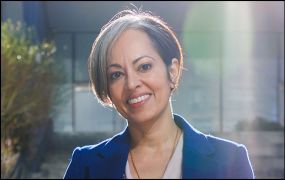
Former Genzyme Genetics president Mara Aspinall (MBA '87) has taken the helm of a new cancer diagnostics business, On-Q-ity Inc.


Past Issue | September 2008

Mara Aspinall

Mara Aspinall (MBA '87) talks about the promise of personalized medicine in a September 2008 Q&A.

Copyright © 2009 President & Fellows of Harvard College
  • Harvard University
  • Jobs at HBS
  • Privacy Policy
  • Terms of Use
  • Give Us Feedback
  • RSS