HBS Quick Links
  • HBS Home
  • MBA
  • Executive Education
  • Doctoral Programs
  • Faculty and Research
  • Alumni
  • Publishing
Site Index
  • HBS Home
  • Contact Us
  • Map/Directions

Harvard Business School Alumni

  • Home
  • Alumni News
  • Faculty News
  • Editors Blogs
  • Past Issues
  • About
  • Alumni Homepage
  • Tools
    • You are not logged in.

Login

Click the red "LEFA & Password" link at left to learn about your Lifetime Email Forwarding Address and set up a password.

Click the red "?" to learn about your Lifetime Email Forwarding Address and set up a password.

.hbs.edu
Forgot your password?
Tools Help

Find a friend, find a job, or find out more about the latest HBS research. Access a wealth of tools and resources exclusively for HBS alumni with your LEFA.

Cover

Current Issue: September 2009

  • Contents
    • Rich Wilson
    • E Ink’s wild ride
    • Over the Top
    • Read All About It!
  • Editor's Note
  • Letters
  • In Brief
    • The Scene: We Did It!
    • My Two Cents: Sheryl WuDunn (MBA ’86)
    • MBA Oath Maintains Momentum
    • Ready for Launch
    • Bold Idea Takes Off
    • Noted & Quoted
    • From Bytes to Bites
    • Class Day, Commencement Mark New Beginning for Newest Alumni
    • Remembering "Mr. Harvard"
    • Make the Most of HBS Alumni Resources
    • Back to School
    • 2 + 2 = All Smiles
    • of Note
    • Alumni Bookshelf: Building Your Own Dream Team
    • Alumni Books
  • Ideas
    • Faculty Q&A with HBS professor Peter Tufano: Consumer Finance Makes HBS Debut
    • Case Study: Of Value and Values
    • Faculty Opinion: How to Fix Wall Street
    • Faculty Books
    • Faculty Research Online
  • Newsmakers
  • Last Look

Advertise with Us

Change Address

Last Look

What's going on here?...
Find out

june 2002

Research, articles, news mentions, and blogs from the HBS faculty. Submit a story

Update

  • Latin American Conference Highlights Region's Diversity
  • Africa Business Conference Creates Ongoing Forum for Change
  • Hawes Hall Dedicated
  • Dinner Celebrates Professorships
  • Faculty Debate Lessons from Enron's Collapse
  • Pursuing the Ultimate Deal: Negotiating Peace in the Middle East
  • Be Our Guest: HBS Show 2002 Goes Off without a Hitch
  • Fellowship Dinner Brings Students and Donors Together
  • HBS Students Negotiate a Victory
  • Late Start, Dramatic Finish
  • HBS Vets Support Homeless Comrades
  • New Fellowship Program Encourages Young MBAs to Work for Nonprofits
  • Time Out Steven Murch: Philanthropist-in-Training

Latin American Conference Highlights Region's Diversit

Hausmann on the Argentina: the need for confidence in the midst of crisis and tough economic policies. Photo: Thomas J. Fitzsimmons

Business success stories. Aramburuzabala of Grupo Modelo and Grupo Televisa reflects on the challenges facing women in Latin America. Photo: Thomas J. Fitzsimmons

Latin America's woes and achievements — from the Argentine economic crisis to a host of business success stories — were the focus of “Sources of Competitive Advantage in Latin America,” held March 2 at HBS. The eighth annual Latin American Business Conference, organized by the HBS Club Ibero-Americano in collaboration with the David Rockefeller Center for Latin American Studies at Harvard University, attracted some 350 attendees for a full agenda of speakers, panels, and case presentations.

In an afternoon keynote address, Ricardo Hausmann, an expert in the practice of economic development, discussed the Argentine crisis that began late last year. A professor at Harvard's Kennedy School of Government, Hausmann described the economic factors leading to the fiscal collapse and suggested policy implications for the future. Argentineans need to be given confidence that at least some banks are solvent and that a credible monetary policy will emerge, he said. The country also needs international support, but such aid may be hard to come by now.

Asked if converting the Argentine money supply into long-term bonds that people don't believe will be paid back can help the country, Hausmann admitted that such solutions are “horrible,” but there isn't much choice in a crisis. The appropriate strategy is to minimize the number of rules that have to be broken in order to get the country out of the current situation, he stated. “It's not nice to tell people who have deposits that now they don't have them, they have a long-term bond…but it's probably the least damaging solution to the problems they are facing right now.”

Felipe Monteiro, a senior researcher at HBS's Latin America Research Center (LARC) in Buenos Aires, moderated an afternoon session on business success stories. The panel featured Horácio Forjaz, EVP of corporate communication at Embraer, the Brazilian aircraft manufacturer; Ana Maria Diniz, EVP of operations for Grupo Pão de Açúcar, Brazil's largest food retailer; and María Asunción Aramburuzabala, vice chair of the boards of Mexico's Grupo Modelo (which holds the beer company Corona) and Grupo Televisa.

Aramburuzabala told of inheriting her position at Grupo Modelo from her father, who died in 1995. Although a certified public accountant, she had no work experience at the time of his death; however, she, her mother, and her sister held significant investments and controlling stakes in the company.

“It seemed we were a big fish to eat, and everybody wanted a piece of us,” she told the audience with a wry grin, going on to describe how the three fought to keep control of the corporation. Resisting stereotypes in a male-dominated society is difficult but necessary, said Aramburuzabala, who frequently addresses women at colleges in Mexico. “I always tell them to take risks and dare to do what other people say can't be done by a woman. I think that's the key to succeeding,” she observed.

Conference chair Diego Azqueta (MBA '02) and a core team of some fifteen students devoted considerable effort to ensuring that conference speakers and panelists represented the region's diversity. “There's a tendency to think of Latin America as one big pie, when in fact it's made up of many slices,” he said, noting that speakers traveled from cities such as Mexico City, Caracas, São Paulo, and Santiago. Unfortunately, four participants from Buenos Aires canceled due to ongoing troubles at home. “It's understandable why they weren't able to come,” noted Azqueta, “but we missed the perspective they would have brought to the conference.”

Azqueta said his experience organizing the conference highlighted the power of the HBS network. “We drew on the Rolodexes of all our club members to find panelists and speakers, and the faculty and people from the LARC were extremely helpful as well,” he commented. “We had a lot of resources at our command, and that made all the difference in putting together a successful event.”

This article was compiled from reports posted on the HBS Working Knowledge portal. Visit www.workingknowledge.hbs.edu for more coverage.

RETURN TO THE TOP

Africa Business Conference Creates Ongoing Forum for Change

Professor John Quelch (center) moderated a panel on emerging opportunities in Africa. Photo: Justin A. Knight

Singer Angelique Kidjo performed for an enthusiastic group Friday night. Photo: Justin A. Knight

Over six hundred participants gathered at HBS March 8–9 for the fourth annual Africa Business Conference, “Africa, Inc.: A New Frontier for Business.” In addition to keynote speakers, panel discussions, and case analyses, the conference, sponsored by the HBS Africa Business Club, featured a Friday afternoon film festival with works from Senegal, Burkina Faso, and Guinea and a performance that evening by Angélique Kidjo, a Benin-born singer whose repertoire ranges from reggae to gospel to Zairean rumba.

Frank Savage, CEO of the financial-services company Savage Holdings LLC, delivered the Saturday morning keynote speech in Burden Auditorium. In his address, he encouraged African MBA students to use their skills and knowledge to help develop the African continent. Referring to corrupt leaders in Africa, Savage said, “We still have some of the old guard who don't understand that things have changed. They are on their way out, and you are on your way in. It's inevitable: They cannot fight the tide of change.”

Following Savage's address, participants attended one of six panels on tracks ranging from privatization to the developmental role of institutional foundations. HBS professor John A. Quelch moderated a session on emerging opportunities in Africa. Quelch, the School's senior associate dean for International Development, welcomed the SRO crowd in Aldrich with a smile, noting, “I'm very pleased with our market share.”

Despite the challenges posed by a developing infrastructure and bouts of political instability, opportunities in Africa abound, panelists agreed. The difficulty lies in expanding the world's understanding of a culturally diverse continent that is in the earliest stages of exploring high-tech sectors such as e-commerce and telecommunications. “Africa is a blank canvas where anything can be done,” declared Segun Agbaje, an executive director at Guaranty Trust Bank. “In addition to an information revolution, we need an ideological revolution that will change people's ideas about what is possible,” added Amadou Mahtar Ba, president of AllAfrica Global Media.

Part of that change comes when foreign-educated Africans return home, said Ayisi Makatiani, founder and CEO of Africa Online. “It's easy to live in the United States, but there's a huge need for all of you — and you're well-positioned to exploit the opportunities that are available in Africa now.”

Nigerian Hakeem Belo-Osagie (MBA '80), chairman of the United Bank for Africa, addressed attendees at the banquet that evening, sharing life lessons from his experiences as an entrepreneur and father of four children. “It was an incredibly inspirational speech,” said Roderic E. Norman (MBA '02), copresident of the Africa Business Club. “Listening to an HBS alumnus who has been a success in the African business community — when so often all you hear about are the problems — was an empowering experience.”

For more coverage of this and other student conferences, visit the “Special Reports” section of the HBS Working Knowledge Web site at www.workingknowledge.hbs.edu.

Small Club, Big Impact

Photo: Justin A. Knight

Africa Business Conference cochairs George Osawaye and Ngassam Ngnoumen (both MBA '02) and a team of student organizers began planning for the March event last August. They couldn't be more pleased with the results.

“One thing we learned this year is that the conference has gained so much visibility that we no longer own the platform — we're the stewards for it,” says Ngnoumen, a first-generation American who has lived in Nigeria, Cameroon, and Côte d'Ivoire. “The expectations of participants have evolved, too. They see the conference as an opportunity to access ideas that can positively change their respective countries.”

“We're a small club, but we try to have a big impact on the HBS community,” remarks Osawaye, a native of Benin City, Nigeria. “The conference is a forum that brings together some of the key players in Africa so they can have a thought-provoking discussion and create and implement new strategies.” Osawaye further notes that participants can continue their dialogue with one another via discussion forums on the conference Web site.

Both Ngnoumen and Osawaye plan to use their business skills to aid Africa's development. Osawaye, an entrepreneur who founded an IT solutions company before coming to HBS, will return to Nigeria after graduation and hopes to launch a business there. The decision of whether or not to return is complicated and deeply personal, Osawaye says. Security issues, for example, are a primary concern: His father, a retired businessman, is still recovering from complications resulting from an attack in Nigeria last year.

“I think some people have to make the sacrifice and go back if things are going to change,” he remarks. “With that said, I have nothing against anyone who decides differently.”

“With each conference, the club tries to make its objectives as actionable as possible,” says Ngnoumen, who expects to work in the United States for a few years before reassessing her options in Africa. “It begins as a dialogue, then moves on to strategies and implementation; hopefully, in another ten or fifteen years, we can see the results of our actions and make a difference.”

RETURN TO THE TOP

Rod Hawes and Dean Clark had time to chat before the dedication ceremony. Photo: Richard Chase

Two of the Hawes grandchildren join the festivities in the Dean's House garden. Photo: Richard Chase

A behind-the-scenes tour of Hawes Hall highlighted building's powerful technololgy. Photo: Richard Chase

The building features 2,000 square feet of informal gathering space on each floor. Photo: Edward Jacoby

Following lunch at the Dean's House members of the Hawes family went next door to see the new bulding, which is adjacent to the norhteast corner of Aldrich Hall. Hawes Hall completes the third side of the Aldrich forecourt, creating a courtyard in the Frederick Law Olmstead tradition. Photo: Richard Chase

Beverly and Rod Hall enjoyed a proud moment in a new classroom. Photo: Richard Chase

Hawes Hall Dedicated

On a sunny Friday at the end of April, close to forty members of the Hawes family and some two hundred HBS faculty, staff, students, and alumni gathered to celebrate the opening of the School's newest academic building, Hawes Hall. Featuring eight amphitheater-style classrooms equipped with state-of-the-art technology, Hawes Hall is a gift from Beverly and Rodney A. Hawes, Jr. (MBA '69), both of whom delivered thoughtful and inspiring remarks at the dedication ceremony.

Stressing his ultimate desire that the building will help the business community identify and solve worldwide problems, Rodney Hawes expressed his hope that, in addition to the generations of MBA and Executive Education students who will attend classes in Hawes Hall, the School's teaching mission will be greatly enhanced by the technology in the building, including videoconferencing, teleconferencing, Webcast, and broadcast capabilities. Hawes was filled with emotion as he recounted how his entrepreneurial parents always managed to put food on the table — for their children as well as for complete strangers — despite their humble circumstances. From his parents, Hawes said he learned three lessons: the importance of family, the brotherhood of all humans, and the value of education. “I believe my parents are looking down on us today and smiling,” said Hawes, adding that he tried to follow their example of “making a difference in this world.”

Beverly Hawes praised the many people who had worked together to bring to fruition such an extraordinary building. “All of what you are witnessing today is the result of a spectacular collaboration of a community that operated at its best and finest capacity,” she said. She credited Dean Kim B. Clark for choosing such “vital and capable associates,” whom she described as “a collection of superior minds and diverse talents who were all directed to the same purpose.”

p>Sharing the podium with the Haweses were Dean Clark; Student Association copresidents Annemarie Jensen and Sal Khan (both HBS '03); Cahal Stephens, president and CEO of Einhorn Yaffee Prescott Architecture & Engineering; and Peter Campot, CEO of William A. Berry & Son, Inc. Praising the Haweses for their hands-on participation and vision of the project, which included ensuring that there was ample informal gathering space throughout the building, Clark said, “Rod and Beverly had a real sense of what this building ought to be, and they wanted to get it just right — and it is.”

RETURN TO THE TOP

Dinner Celebrates Professorships

Roy D Shapiro, the Philip Caldwell Professor of Business Administration (at right), shares a laugh with Philip Caldwell (MBA '42), former chairman and CEO of Ford Motor Company. Photo: Thomas J. Fitzsimmons

Linda A. Hill, the Wallace Brett Donham Professor of Business Administration, delivered remarks on the importance of faculty mentors and being part of an extraordinary community dedicated to excellence in teaching and research. Photo: Thomas J. Fitzsimmons

David B. Yoffie, the Max and Doris Starr Professor of International Business Adminstration, Sherman H. Starr (MBA '50), Terry Yoffie, and Jill Starr. Photo: Thomas J. Fitzsimmons

The School's first-ever Professorship Dinner, hosted by Dean Kim B. Clark, was held in April in honor of donors and recipients of endowed professorships at HBS. New and recent chairs highlighted were the Naylor Fitzhugh Professorship of Business Administration (held by David A. Thomas), the Eugene Holman Professorship, the Lumry Family Professorship at Harvard Business School (held by Alan MacCormack), the MBA Class of 1950 Faculty Development Fund, the MBA Class of 1975 Professorship of Entrepreneurial Management, the Novartis Professorship of Leadership and Management, and the Philip J. Stomberg Professorship.

Dean Clark expressed his gratitude to those in attendance for “so generously helping to perpetuate excellence at HBS.”

RETURN TO THE TOP

Faculty Debates Lessons from Enron's Collapse

In early April, nearly ninety HBS faculty members came together for a half-day symposium on “Strategy, Values, and Governance in the Rise and Fall of Enron.” Organized by the School's Division of Research and moderated by Professor Krishna Palepu, senior associate dean and director of Research, the unprecedented session brought together faculty with expertise in all aspects of business for a far-reaching discussion of the fallen corporate giant.

Palepu opened the discussion by stating the afternoon's objectives. “Together, we will try to make sense of what happened to cause the most spectacular corporate failure in modern capitalism. Was this an aberration?” he questioned. “Can we draw lessons that can be applied to other corporations? What are the implications for our research and teaching?” Dean Kim B. Clark also spoke at the beginning of the proceedings, describing the event as a way to “explore together and learn from this watershed issue.” “The fall of Enron is an event with ramifications not only for how business will be conducted in the future, but for how business should be taught at institutions such as ours. I hope this discussion will stimulate new thinking about how and what we teach at Harvard Business School.”

Professor Krishna Palepu led nearly ninety faculty members in an afternoon-long discussion on the fallen corporate giant. Photo: Thomas J. Fitzsimmons

Because the symposium drew on unpublished research — some of it confidential or compiled in the wake of the company's collapse — faculty members spoke off the record. There were four sessions: “Was the Failure of Enron the Result of a Flawed Strategy?,” led by Professors Joseph Bower, David Garvin, and Michael Roberto; “Why Did Investors Support Enron So Enthusiastically for So Long?,” conducted by Professors Paul Healy, Amy Hutton, and Krishna Palepu; Professor Jay Lorsch's perspectives on “Why Did Enron's Board Fail in its Governance Function?”; and “What Role Did Flaws in Organizational Systems and Values Play in Enron's Downfall?,” a discussion led by Professors Thomas Piper, Malcolm Salter, and Robert Simons.

The lively and informative presentations were punctuated by questions from faculty eager to share their own insights or to challenge colleagues' assumptions. The group worked together to assemble the pieces of the Enron puzzle. How could a company with a 64-page code of ethics and an espoused belief system that stressed respect, integrity, and communication end up in such a situation? How could an innovative business model that showed so much promise have gone wrong so suddenly? Why did Wall Street and institutional investors persist in supporting the company's stock, which one professor described with a raised eyebrow as “mighty highly priced”? How did Arthur Andersen's role at the company become so entangled with its own self-interest? What could Enron's board of directors have done differently? Did the widespread enthusiasm surrounding the company's success create an “emperor's new clothes” scenario, where those who did raise questions were dismissed out of hand? What role did deregulation play? Did a “perfect storm”–like convergence of unlikely factors overtake the company, or is what happened to Enron a plausible outcome for other 21st-century firms?

An underlying question throughout much of the debate centered on whether the company's downfall resulted from a failure of values or of systems — both inside Enron and in the capital market institutions — with convincing evidence presented on both sides. At the end of the day, there emerged a general consensus that Enron's demise was what one faculty member characterized as “a creeping disaster” that can only be understood when it is viewed through a variety of lenses. “I think it's safe to say,” posited Professor Rosabeth Moss Kanter near the end of the discussion, “that the problems that brought down Enron were incredibly complex. One reason this happened was that nobody was able to see the whole picture at once until after the fact.”

Dean Clark agreed. “Our discussion today seems to indicate that there were moments in time when things might have gone differently had Enron's leaders and the leaders of organizations that worked with Enron acted with a different set of values and purpose.” Encouraged by the afternoon, Clark announced plans for an Enron session for MBA students later in the spring and said he would create opportunities for further faculty deliberation on this and other important and timely issues.

— Deborah Blagg (send e-mail to the author)

RETURN TO THE TOP

Pursuing the Ultimate Deal: Negotiating Peace in the Middle East

Ross with Arafat in Gaza City in 1998. Violence trumps everything. Photo: AP Wideworld Photos

For more than twelve years, during the administrations of Presidents George H.W. Bush and Bill Clinton, Ambassador Dennis B. Ross played a leading role in helping to shape U.S. involvement in the Middle East peace process. Thus, when he spoke at HBS in mid-March, as hostilities in the region threatened to spiral out of control, the worsening situation had a poignant resonance for Ross personally.

Appearing as part of the School's “Rising to the Challenge” series of presentations examining post–September 11 issues, Ross said of the violence between Israelis and Palestinians that “we are as close to what things looked like before 1948 as we have been since that time.” Ross, who is currently a Distinguished Fellow and Counselor at The Washington Institute for Near East Policy and a lecturer at Harvard's Kennedy School of Government, emphasized that the violence must stop before any hope for peace can be reestablished. Both sides have the power to control their extremists, he stressed, so a lessening of hostilities is achievable.

One proposal that was raising hopes in mid-March was the Saudi initiative that offered Israel normalization of relations with Arab countries in exchange for Israel's withdrawal to its pre-1967 boundaries. While “not new in terms of content,” the initiative was noteworthy “in terms of its psychology,” Ross explained, for several reasons: Saudi Arabia, a seat of religious orthodoxy, was presenting it; the proposal was being put forth despite the most intense hostilities in decades; it gave hope to the Israeli public, which thought it had no negotiating partner left in the Arab world; and it offered normalization, which goes far beyond a mere “cold peace.” “The initiative also gives the Palestinians an umbrella under which they can stop violence, if they want to,” Ross observed.

However, Ross said, the levels of the March violence were so high, and ordinary Israelis and Palestinians so inflamed, that an initiative such as the Saudi proposal might never get off the ground. Violence trumps everything, Ross noted, adding that militant elements on both sides welcome it. For their part, many Palestinian extremists are convinced that violence forced Israel to withdraw unilaterally from southern Lebanon in 2000; Ross said that he has come to understand that the withdrawal was “a strategic mistake.”

To address the current situation, Ross would first try to “fix the reality on the ground because it overwhelms everything else”; next, he said, it's necessary “to introduce a new factor that has enough drama built into it so that both sides have a reason to step back and to pause.” Ross would call on Israel to cease its attacks for ten days, to give the Palestinians an opportunity to halt violence from their side. Working groups would meet daily to assess what each side had done to comply with promised actions. Assuming that the cooling-off period takes hold, then foreign ministers from Arab countries and Israel would set up a more comprehensive outline for negotiations.

Ross's experience in the Middle East suggests that no matter how comprehensive and reasonable a negotiated settlement may appear, acceptance is subject to approval by complex, often mercurial individuals. Over the years, Ross has worked with a succession of Middle East leaders, but given that Yasser Arafat has been a constant on the Palestinian side, Ross has come to know him particularly well. “I have spent more time with Arafat than has any non-Palestinian,” said Ross, who is writing a book about his Middle East experiences. “I don't believe he is against peace; I believe he wants a deal but he's not capable of doing one. He is the most passive leader I have ever dealt with in my life.”

Ross emphasized that, at the twilight of the Clinton administration, Arafat could not bring himself to accept an accord that would have given the Palestinians an independent state (with the Arab neighborhoods of East Jerusalem as its capital) as well as nearly all of the West Bank and Gaza. “Claims, grievances, victimhood, and his cause are so much a part of Arafat's life that he's unable to give them up,” Ross stated. “There are revolutionaries who have a very hard time making the transition to being a statesman — what's required is a capacity to redefine yourself.” To make that leap, Ross implied, requires a degree of self-knowledge; Arafat, he concluded, ultimately could not close the deal “because he didn't know himself.”

—Garry Emmons (send e-mail to the author)

Click here for more coverage of Dennis Ross and the Middle East.

RETURN TO THE TOP


Be Our Guest: HBS Show 2002 Goes Off without a Hitch

This year's show played on a challenging 2002 job market. Photo: Thomas J. Fitzsimmons

Amid the usual opening night jitters and fanfare, the curtain went up on the much anticipated 29th annual HBS Show, which ran April 17–20 in Burden Auditorium. Since its first production in 1974, the event has showcased the dramatic, musical, and theatrical talent of HBS students. This year's performance was no exception.

Titled Infernal Rate of Return, the show played on the challenging 2002 job market, as HBS students sold their souls for employment to the tune of familiar songs such as “Be Our Guest” (“Be Depressed”), sung by students upon learning their fate from Career Services, and “Soul Man” (“Soul Plan”), as the devil hatched a plan to capture students' souls in exchange for jobs. As in years past, the production's parodies of the many aspects of life at HBS included jokes, classroom references, and good-natured jibes at faculty.

The daunting task of directing this year's production was given to Christina Aragon (MBA '02), who began planning last May. “It has been an excellent learning experience to guide the creative team and to see our vision come to life,” reported Aragon, an active participant in theater for many years. “It was also a practical application of many classroom principles: We encountered financial, operational, and leadership challenges throughout the entire process.” Aragon worked alongside Executive Producer Ruby Kam (HBS '03) and Production Manager Jonathan Mendelson (MBA '02). “The talent here is amazing,” said Kam. “People come to HBS to get a business degree, but many have talents far beyond the classroom.”

Sponsors Novartis, Morgan Stanley, and UnitedHealth Group helped offset production costs, as did the sale of some 2,400 tickets to students, alumni, and staff during the show's four-day run. “The show has a way of rallying the students and bringing the HBS community together,” observed Kam. “We all find that gratifying.”

— Lee-Ann Landis (send e-mail to the author)

RETURN TO THE TOP

june 2002

This article previously appeared in the following issue:

june 2002 Issue Cover

  • Up to the Challenge: Profiles from the Class of 2002
  • Profile: The Invisible Hand - Robert Massie and God's Green Earth
  • Q & A: Alfred L. Cheauré - A Dog's Life
  • Update
  • Newsmakers
  • R&D
  • Network

Table of Contents

  • Print
  • Send to a friend
  • Suggest an article

Alumni News | Mara Aspinall

Ex-Genzyme Official to Lead Testing Firm

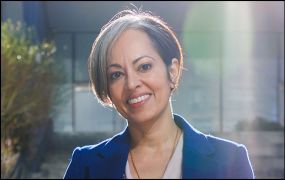
Former Genzyme Genetics president Mara Aspinall (MBA '87) has taken the helm of a new cancer diagnostics business, On-Q-ity Inc.


Past Issue | September 2008

Mara Aspinall

Mara Aspinall (MBA '87) talks about the promise of personalized medicine in a September 2008 Q&A.

Copyright © 2009 President & Fellows of Harvard College
  • Harvard University
  • Jobs at HBS
  • Privacy Policy
  • Terms of Use
  • Give Us Feedback
  • RSS