|
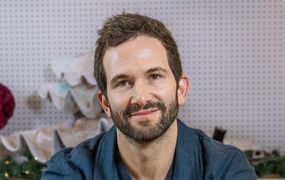
From 1986 to 1992, Kneisel, his wife, Anne, and their two sons lived in London, where he was the managing director responsible for Morgan Stanley's international investment banking operations. On returning to New York, he took over responsibility for the firm's global equity capital markets business, and in 1997, he became an advisory director. A veteran rock climber and avid fisherman, Kneisel lately has been spending more time at his oceanfront home on the North Shore of Boston. "The last quarter-century has been a time of unbelievable good fortune from an economic and capital markets perspective," notes Kneisel. "Our generation of HBS graduates didn't create this business climate, but we have certainly been the beneficiaries." Kneisel is currently involved in a number of Dartmouth alumni activities and serves on several independent school boards. "Many of us are able to enjoy the personal freedom that financial security brings at a younger age than our parents did," he observes. "It has become very important to me to consider carefully how I use that freedom to make a difference." |
How have your priorities changed since 1974?
When I went to business school, achieving professional success was tremendously important, even more important than financial success. To many of us, becoming a managing director at Morgan or Goldman was a coveted goal - just to get that title.
Once you've lived through the excitement and the personal sacrifices of all that, however, you start to think about other things beyond your career.
If you hadn't pursued a career in management, what might you have done instead?
I've always loved connecting with nature and being outdoors - whether it's hiking in the White Mountains, fishing for stripers, or just going out to see the whales off Stellwagen Bank. I don't know - maybe I would have been a fishing or climbing guide. Maybe I still will be....
What is the best business advice you've ever received?
The way my father lived his life was very important to me. He was a gifted physician who spent most of his life doing research and teaching, turning his back on the more lucrative aspects of his profession. He was an incredibly ethical man, and his example has been a rudder to me.
I have also been influenced by the philosophy of J.P. Morgan, one of my firm's progenitors. He said that the most important thing about a man was his integrity. When he made a decision about whether to lend someone money, he made it on the basis of his assessment of the person's character, not on his perceived ability to repay the loan. More than half a century later, I think that's still pretty good business practice.
Mentors?
Here at Morgan Stanley, I have been fortunate to work with so many outstanding people - many of them HBS graduates. Dick Fisher (MBA '62) and Bob Greenhill (MBA '62) not only led the firm through a major transition, they were a powerful inspiration to their colleagues. As to personal mentors, I would mention three. Tom Saunders, with whom I worked directly for eight years, was a superb banker and one of the greatest client guys ever. Fred Whittemore knew where Morgan Stanley fit in the universe - and he could syndicate anything. Gordon Richardson, former governor of the Bank of England, remains a man of impeccable manners and morals and is endowed with a superb mind. At its core, the investment banking business is about good judgment, and I have been surrounded by it throughout my career.
How would you describe the value of Internet stocks today?
If you go back a hundred years, there were a lot of companies that promised great growth by providing a new technology - electricity. The ideas behind those companies were viable, but not all the companies were. They were right to be involved in a new technology; however, the record shows that few of them survived. I expect something like that will happen with Internet companies, although they will, as a whole, have a major impact on our way of life.
How would you rate your personal computing skills?
I am not enthusiastic about spending a lot of time on the Internet. I think that settling for "virtual" anything is a real loss. There's so much texture to life that is lost if you only experience it on a screen - any kind of screen, be it computer, television, or whatever. You need to be able to touch what you're experiencing, to smell it. Isn't that what life is all about?
| Kevin W. Kennedy | Stephen M. Waters | James A. Stern | William J. Kneisel | Donald H. Layton |